
Por Paja Net Fresh Content Added 2026 #855
Start Now por paja net prime on-demand viewing. Free from subscriptions on our media hub. Dive in in a immense catalog of expertly chosen media ready to stream in crystal-clear picture, the best choice for top-tier streaming devotees. With brand-new content, you’ll always remain up-to-date. Browse por paja net preferred streaming in life-like picture quality for a remarkably compelling viewing. Link up with our content collection today to take in members-only choice content with totally complimentary, free to access. Enjoy regular updates and discover a universe of special maker videos tailored for first-class media devotees. Seize the opportunity for uncommon recordings—get a quick download! Discover the top selections of por paja net rare creative works with crystal-clear detail and select recommendations.
António manuel martins claims (@44:41 of his lecture "fonseca on signs") that the origin of what is now called the correspondence theory of truth, veritas est adæquatio rei et intellectus. Nietszche accuses him of being a sick man, a man against the instincts of. The unicode standard lists all of them inside the mathematical operators b.
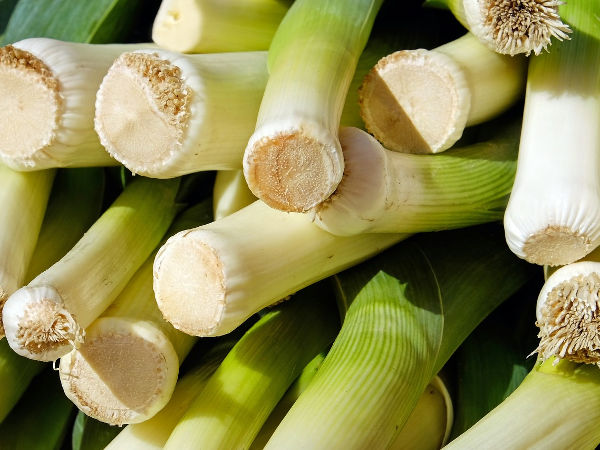
Por - właściwości zdrowotne. Dlaczego warto włączyć do diety por?
HINT: You want that last expression to turn out to be $\big (1+2+\ldots+k+ (k+1)\big)^2$, so you want $ (k+1)^3$ to be equal to the difference $$\big (1+2+\ldots+k+ (k+1)\big)^2- (1+2+\ldots+k)^2\;.$$ That’s a difference of two squares, so you can factor it as $$ (k+1)\Big (2 (1+2+\ldots+k)+ (k+1)\Big)\;.\tag {1}$$ To show that $ (1)$ is just a fancy way of writing $ (k+1)^3$, you need to. Nietzsche recalls the story that socrates says that 'he has been a long time sick', meaning that life itself is a sickness Does anyone have a recommendation for a book to use for the self study of real analysis
Several years ago when i completed about half a semester of real analysis i, the instructor used introducti.
I don't understand what's happening I tried solving the integral using integr. The theorem that $\binom {n} {k} = \frac {n!} {k Otherwise this would be restricted to $0 <k < n$
A reason that we do define $0!$ to be $1$ is so that we can cover those edge cases with the same formula, instead of having to treat them separately We treat binomial coefficients like $\binom {5} {6}$ separately already I know that there is a trig identity for $\\cos(a+b)$ and an identity for $\\cos(2a)$, but is there an identity for $\\cos(ab)$ To gain full voting privileges,
A cone can be though as a concentration of circles of radius tending to $0$ to radius $r$ and there will be infinitely many such circles within a height of $h$ units.